Tannin gets complimented plainly and criticised under the breath
Tannin has a reputation for being the rough part of wine. It is the one that grips, that dries, that rasps. You would expect the vocabulary around it to look the same.
It is remarkably polite.
At the date of this analysis, out of the 4,143,729 tasting expressions analysed by Tastee, drawn almost exclusively from professional tasting comments, 149,149 mention tannin. Here are the twenty-five words that say what it is like.
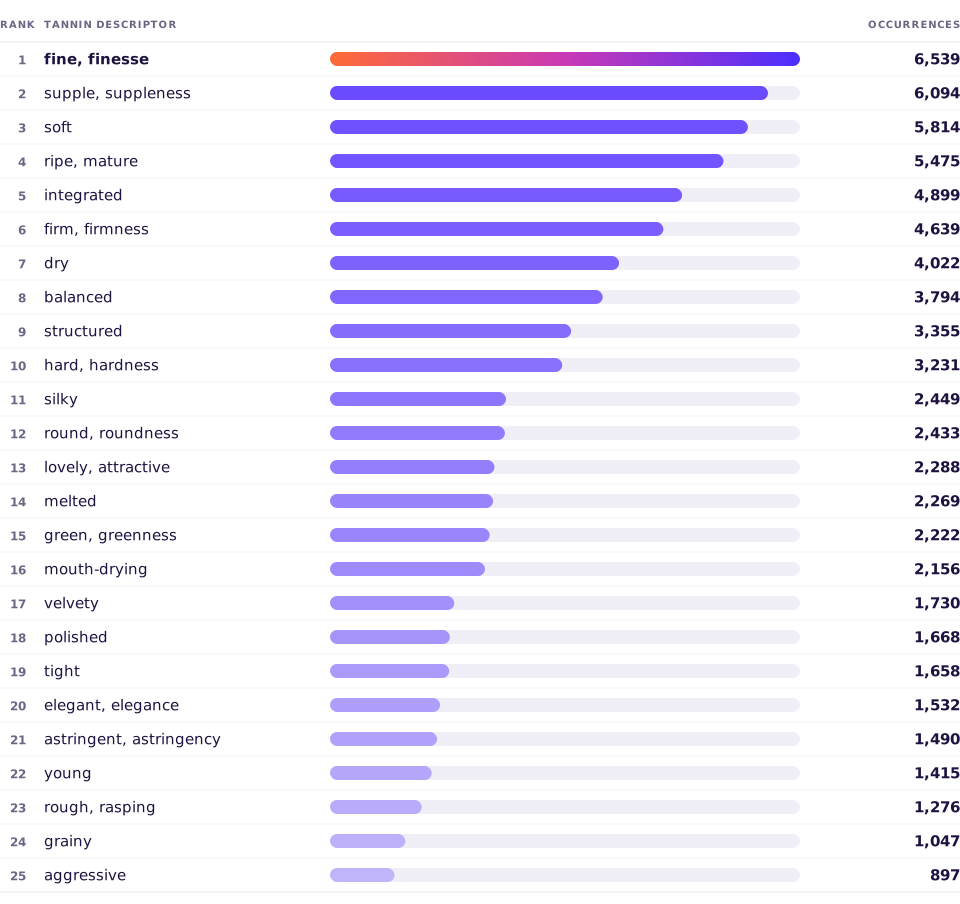
Fine, supple, soft, ripe, integrated. The ranking opens on five praises in a row, and you have to go down to seventh place to meet the first complaint, “dry”.
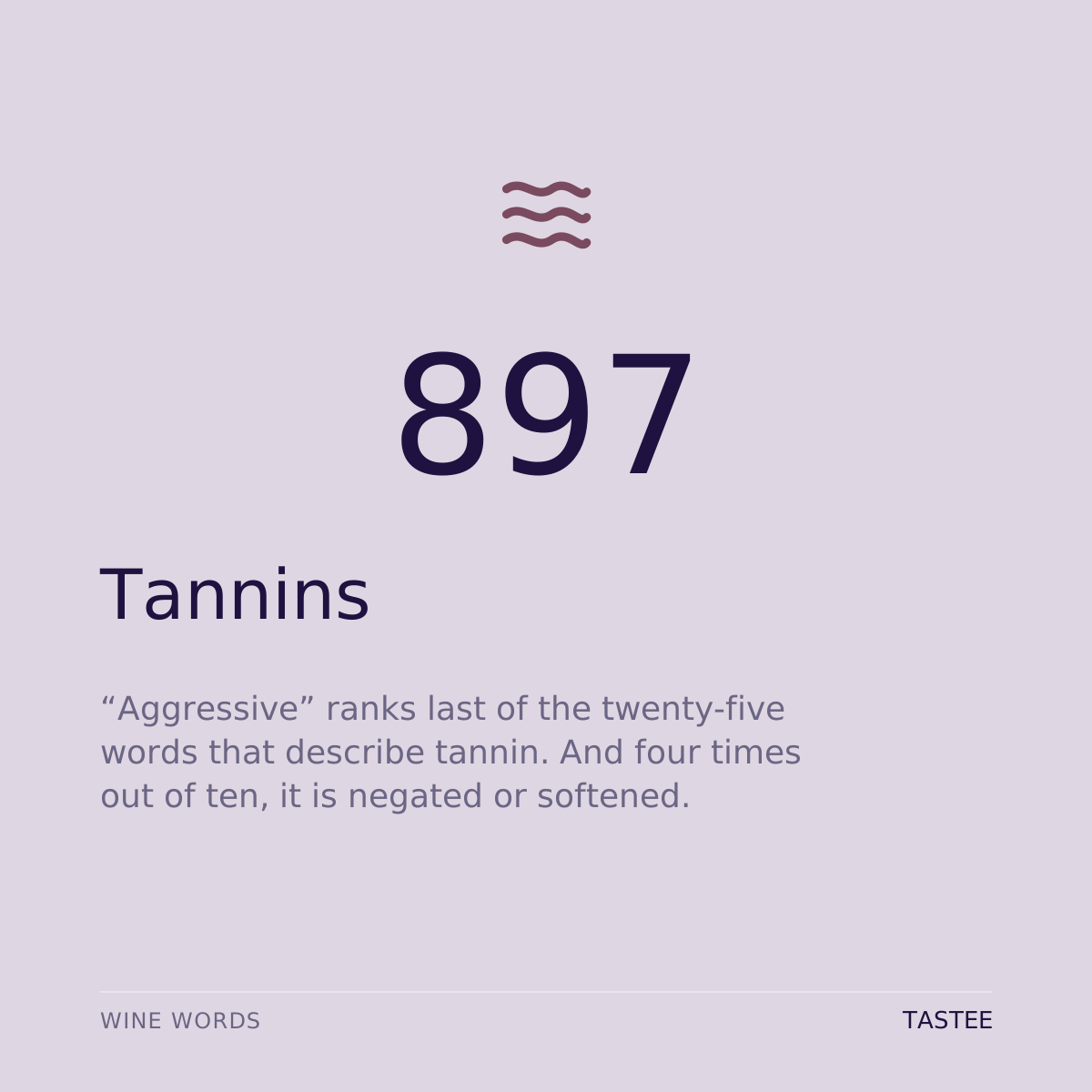
The words that match tannin's reputation all arrive very low. “Hard” is tenth, “green” fifteenth, “astringent” twenty-first, and “aggressive” closes the list.
This is where the data becomes interesting. For each word, one can measure the share of occurrences in which it is negated or softened, from “not aggressive” to “slightly aggressive”.
The result is plainly asymmetrical. “Aggressive” is defused in 42 % of its occurrences, “mouth-drying” in 38 %, “rough” in 37 %, “hard” in 35 %. Facing them, “supple”, “silky” and “soft” are defused in less than 1 % of cases, and “fine” in 5 %.
In other words, almost nobody writes that a tannin is “slightly supple”. Plenty of people write that it is “slightly aggressive”.
The compliment is written in one stroke, the complaint is put in the conditional. Tasters do not hold back, they say what they have to say, but they do not press equally hard depending on which way the point cuts.
And tannin, reputedly the roughest of subjects, is precisely where that caution shows most clearly.
Record your own sensations on Tastee too! Who knows… the next “slightly aggressive tannin” in the database might be the one you write.
Thousands of comments sit dormant in notebooks, spreadsheets, and inboxes. Tastee turns them into sensory profiles, shareable reports, and ready-to-use materials — from a single cuvée's profile to an appellation's typicity, in every language your tasters write in.
Request a demo