The best-known wine fault is the one least often written down
It is probably the best-known wine fault among the general public, and one of the few that an informed enthusiast can name without hesitation. You would expect to find it everywhere in tasting notes.
It is almost absent from them.
At the date of this analysis, out of the 4,143,729 tasting expressions analysed by Tastee, drawn almost exclusively from professional tasting comments, here is the vocabulary of cork and its faults.
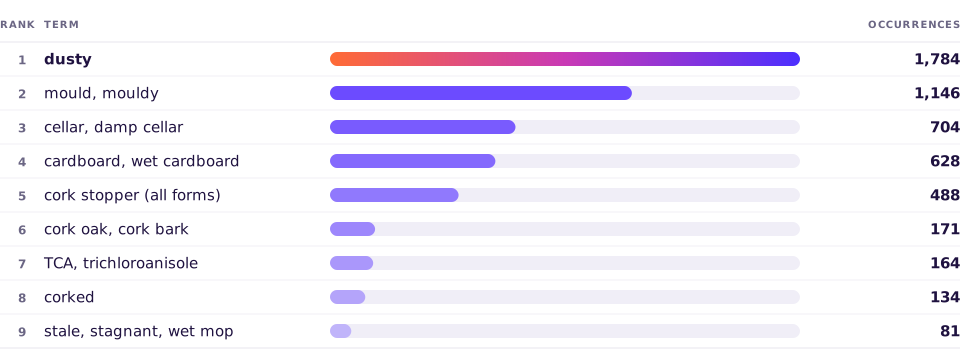
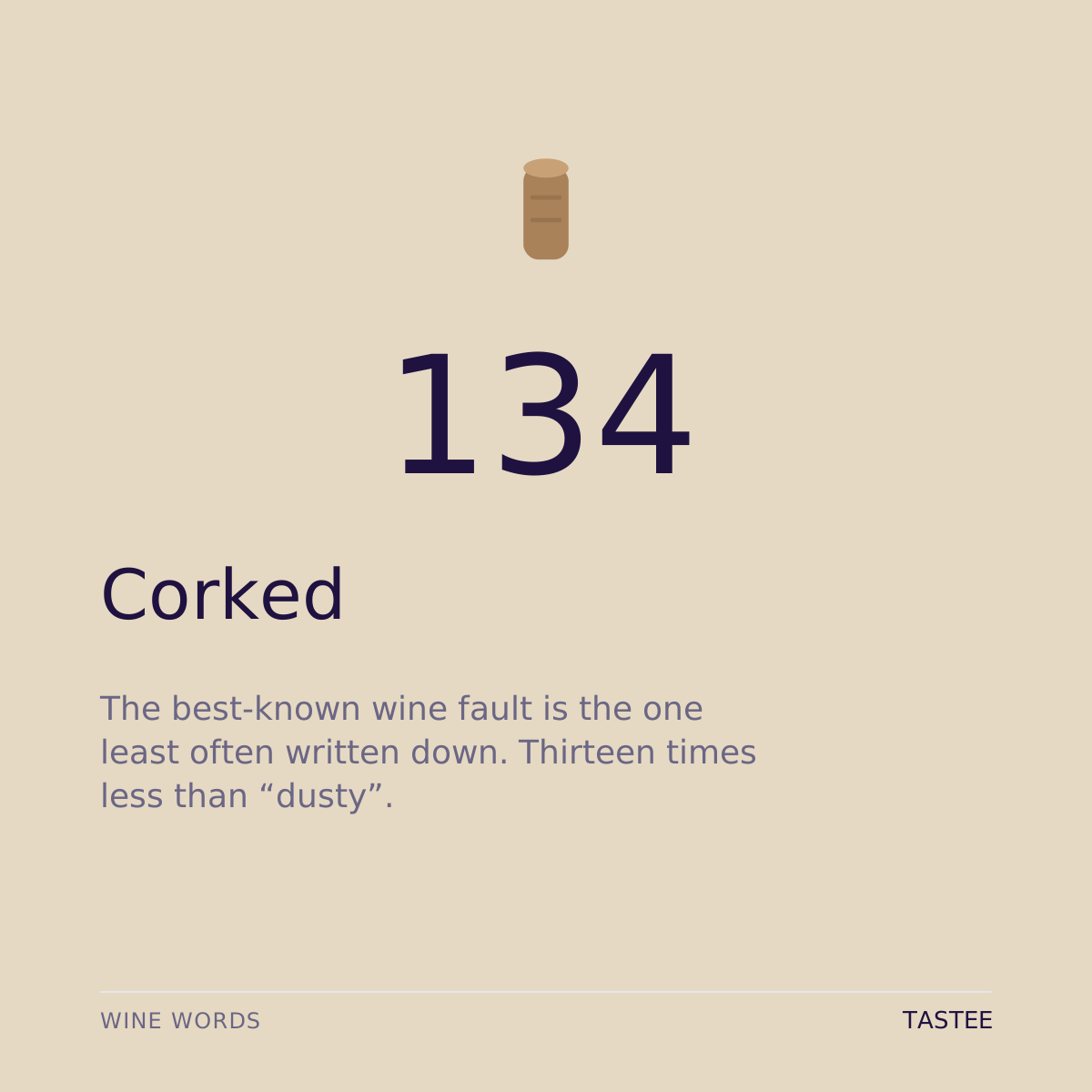
The word that names the fault comes second to last, behind every word that describes it without naming it. “Dusty” weighs thirteen times more than “corked”, mould eight times more, wet cardboard almost five times more.
Those words look like perceptions. “Corked” looks more like a conclusion, and a conclusion gets written down less often than a sensation.
The expressions themselves point the same way. The most frequent ones are not about the wine but about the container: “corked bottle”, “first bottle corked”, “the first bottle was corked”. It is not the wine being described, it is the bottle being set aside.
There is a mechanical reason first, and it has to be owned: a corked bottle does not usually get a full tasting note. It is sent back, another one is opened, and the notebook keeps the second. A good share of the fault leaves the corpus by construction.
That said, the notebook is not empty for all that. When the taster does write, they seem to write less the name of the fault than what they perceived before deciding. Wet cardboard, damp cellar, mould.
So the best-known fault in wine is also one of the least documented in writing. Not because it is rarely encountered, but because there is little to write about a bottle that gets sent back.
What the notebook keeps is above all the words that come before the verdict.
Record your own sensations on Tastee too, even the bad ones! Who knows… the next wet cardboard in the database might be the one you write.
Thousands of comments sit dormant in notebooks, spreadsheets, and inboxes. Tastee turns them into sensory profiles, shareable reports, and ready-to-use materials — from a single cuvée's profile to an appellation's typicity, in every language your tasters write in.
Request a demo