The most used word in tasting, and the least defined
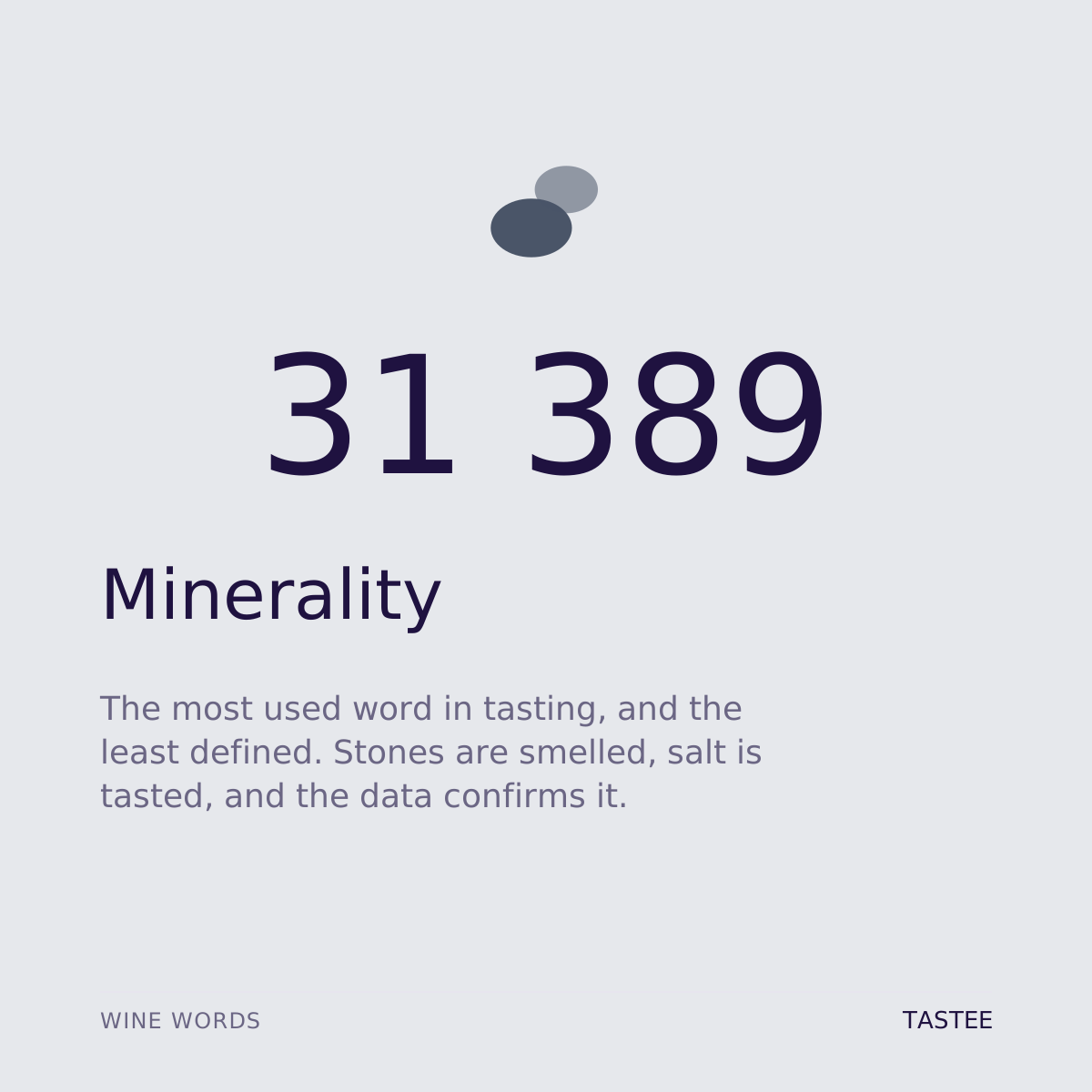
“Mineral.” Nobody quite agrees on what the word means, and everybody writes it. It has become one of the most used terms in tasting.
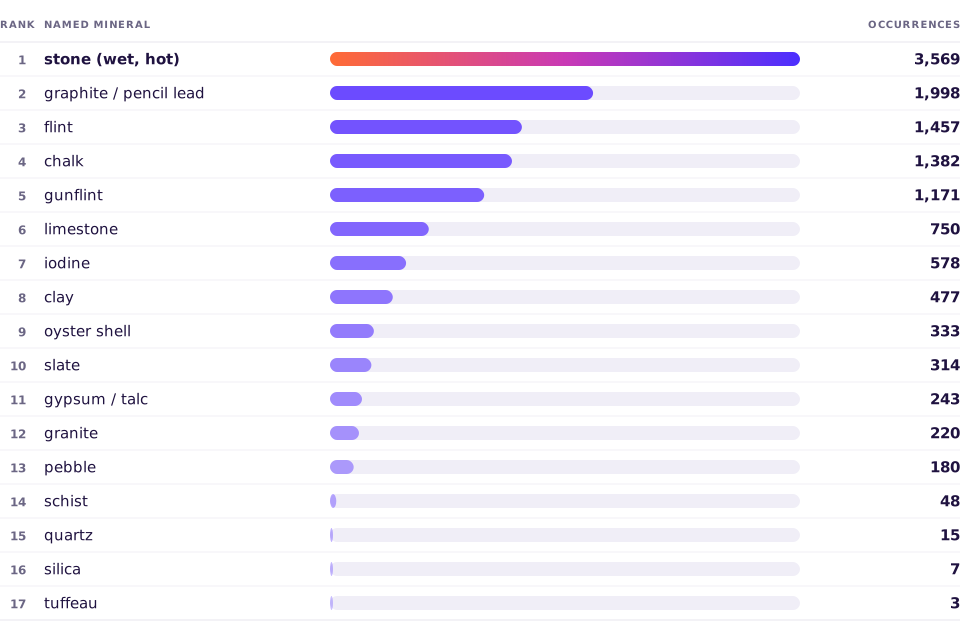
At the date of this analysis, out of the 4,143,729 tasting expressions analysed by Tastee, seventeen minerals are named, for 12,745 occurrences in total. The word “mineral” alone accounts for 31,389.
Geologist Alex Maltman took the problem from the rock's side. In the Journal of Wine Research, in 2013, he points out that the minerals in a soil are complex crystalline compounds, which the vine does not take up as such. What actually reaches the wine are nutrient cations, in minuscule concentrations, and devoid of aroma.
His conclusion is blunt: whatever minerality may be, it cannot literally be the taste of the minerals in the vineyard. With one exception, and one only. Practically all geological minerals are tasteless; the single exception is halite, in other words salt.
In 2018, Wendy Parr, Alex Maltman, Sally Easton and Jordi Ballester reviewed what sensory research knows about the subject. The starting point is candid: there is no accepted definition of minerality, no consensus on the characteristics associated with it, nor even on whether it is a smell, a taste or a mouthfeel sensation.
Asked by Jordi Ballester and his team, 34 wine professionals from the Chablis region gave widely differing definitions. 63 % said they assess minerality by combining nose and palate, 20 % on the palate alone, 16 % by nose alone.
Their definitions fall into three families. The first, the largest, revolves around stone and is essentially olfactory: gunflint, flint, wet or hot stone, chalk. The second is mostly about the palate: acidity, freshness, tension, vivacity. The third evokes the seashore: iodine, saltiness, algae, shellfish.
This is where the data becomes interesting. With no questionnaire, no grid and no protocol, the tasters in the database sort their vocabulary in the same way.
The words of stone go to the nose: flint at 79 %, graphite at 79 %, gunflint at 78 %, wet stone at 76 %, chalk at 66 %.
Salt, on the other hand, swings to the palate. The saline field, 15,111 occurrences, is written 78 % on the palate side.
And “mineral” itself sits in the middle, 44 % on the nose and 56 % on the palate, which matches the 63 % of professionals who say they use both.
In other words: four million freely written expressions rediscover the structure that a survey of 34 people had described. And the line falls exactly where geology places it. On one side the stones, which are smelled. On the other salt, the only mineral that really has a taste, and which is tasted.
“Mineral” names no identifiable substance, granted. But it does not name just anything either: the corpus shows that it covers a stable, shared structure, consistent with what chemistry says.
Next time the word comes to you, simply try to say which side you are on. Stone or salt, nose or palate. The word will not become any more precise, but the person next to you will finally know what you are talking about.
Record your own sensations on Tastee too, mineral or not. Who knows… the next tuffeau in the database might be the one you write.
Thousands of comments sit dormant in notebooks, spreadsheets, and inboxes. Tastee turns them into sensory profiles, shareable reports, and ready-to-use materials — from a single cuvée's profile to an appellation's typicity, in every language your tasters write in.
Request a demo