The word that names almost nothing
Ask a taster: “what exactly does your wine smell of?” If the answer is “truffle”, you can picture it. If the answer is “mushroom”, you can picture that too. If the answer is “earthy”… you can no longer quite picture anything.
And that's the whole problem. Truffle, humus, mushroom, dead leaf: those are nouns, they name things that exist, things you can go and smell. “Earthy” is not a noun, it's an adjective. It names nothing. It only signals a vague resemblance to soil in general.
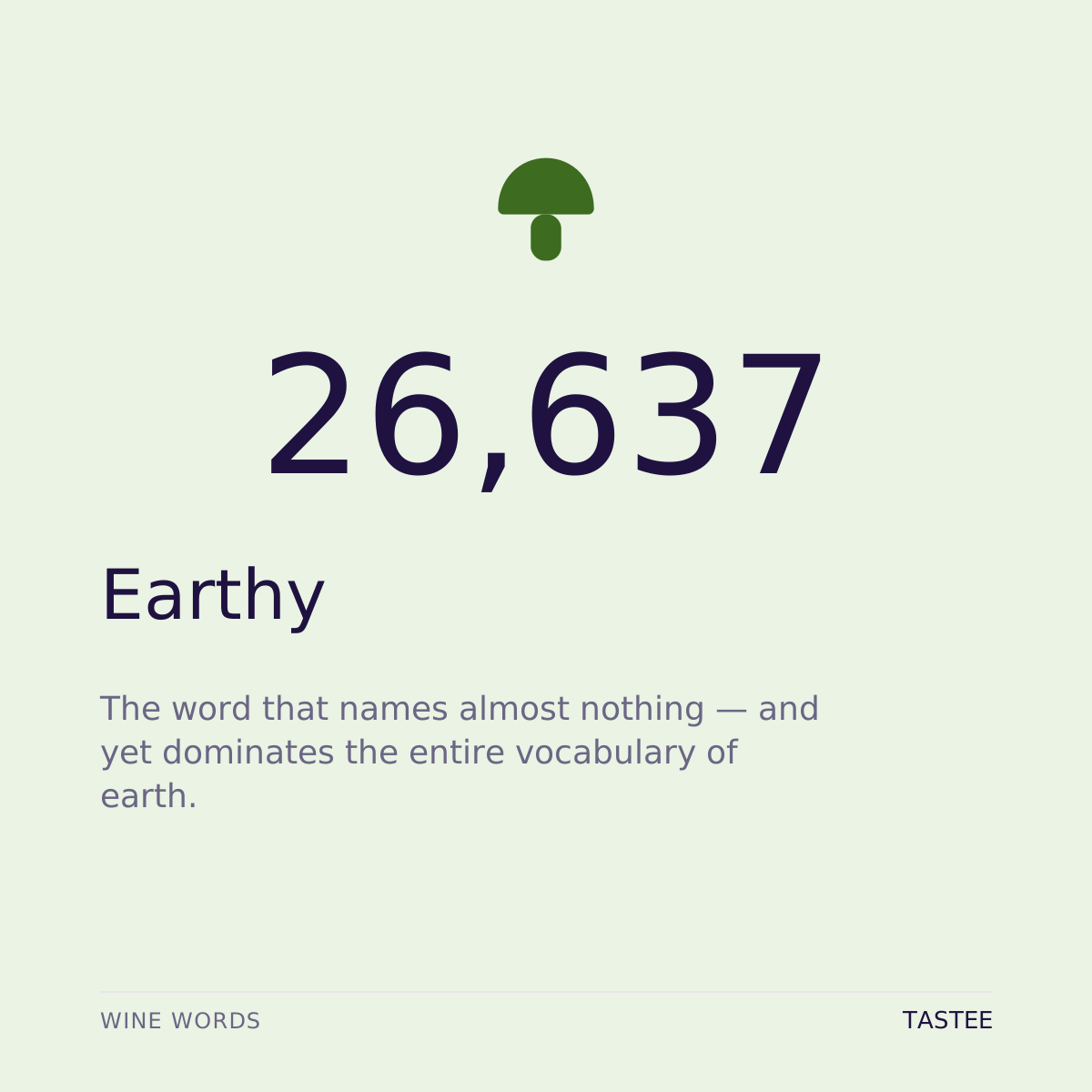
At the date of this analysis, out of the 4,143,729 tasting expressions analysed by Tastee, the vocabulary of earth accounts for 26,637 occurrences. Here is how it breaks down.
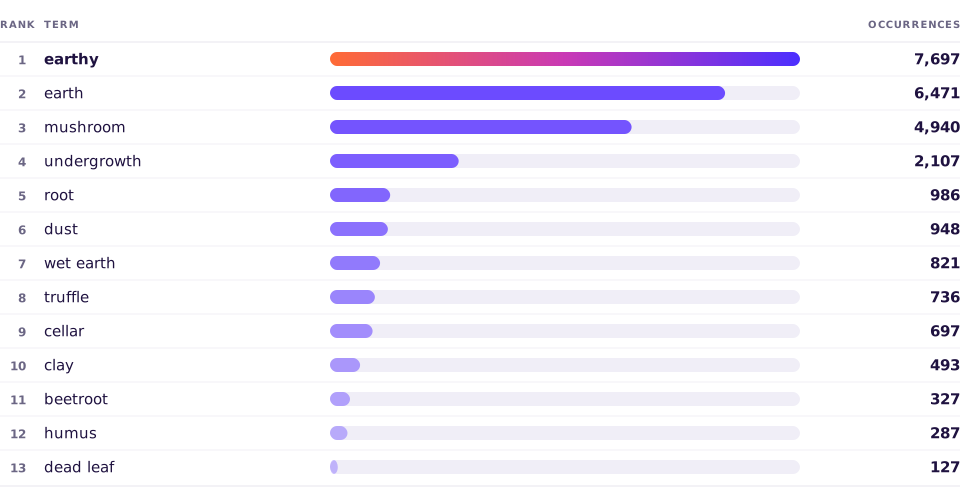
The podium speaks for itself. In first place, “earthy”, an adjective that names no object. Right behind it, plain “earth” — a noun this time, but hardly more forthcoming: it names the ground in general, never what you find in it.
Between them they account for 14,168 occurrences, more than half of the entire vocabulary of earth. Precision only starts at third place, with mushroom.
Meanwhile, the most precise words are dying out. Dead leaf, 127 occurrences. Humus, 287. Truffle, 736. Three perfectly clear images that almost nobody writes any more. On its own, “earthy” outweighs truffle, humus, wet earth, clay, beetroot, root, dust and dead leaf combined.
Tasters have 1,616 different ways of saying “earthy” — we counted them. Sixteen hundred variations on a word that, at bottom, says only one thing: something here reminds me of the ground, and I will go no further.
Two explanations seem plausible to us.
The first: “earthy” is a word with no downside. Writing “truffle” is a commitment: if the person next to you can't smell it, you're wrong. Writing “earthy” points in a direction without ever giving an address. Nobody can really contradict you.
The second: soil smells are genuinely hard to break down. Geosmin, a molecule the human nose detects at a few nanograms per litre, produces a massive and poorly differentiated impression. You can tell perfectly well that something is happening; saying what is another matter.
Next time “earthy” arrives under your pen, try replacing it. Button mushroom or dried porcini? Damp cellar or earth after rain? Forest humus or roadside dust? You could even try petrichor.
You will sometimes be wrong. But a taster who gets it wrong while trying to name things may well improve faster than one who is always right by staying vague.
Record your own aromas on Tastee too, however precise they are. Who knows… the next dead leaf in the database might be the one you write.
Thousands of comments sit dormant in notebooks, spreadsheets, and inboxes. Tastee turns them into sensory profiles, shareable reports, and ready-to-use materials — from a single cuvée's profile to an appellation's typicity, in every language your tasters write in.
Request a demo