The winner is not a citrus fruit

Citrus is the reflex in a great many white wines. Nose in the glass, it's fresh, it's yellow somewhere in your head: citrus. The word writes itself.
But which one, exactly? Lemon, grapefruit, bergamot, clementine? We counted. Properly counted.
At the date of this analysis, out of the 4,143,729 tasting expressions analysed by Tastee, citrus accounts for 123,778 — close to 3% of everything tasters write about the nose and palate of a wine. Here is how it breaks down.
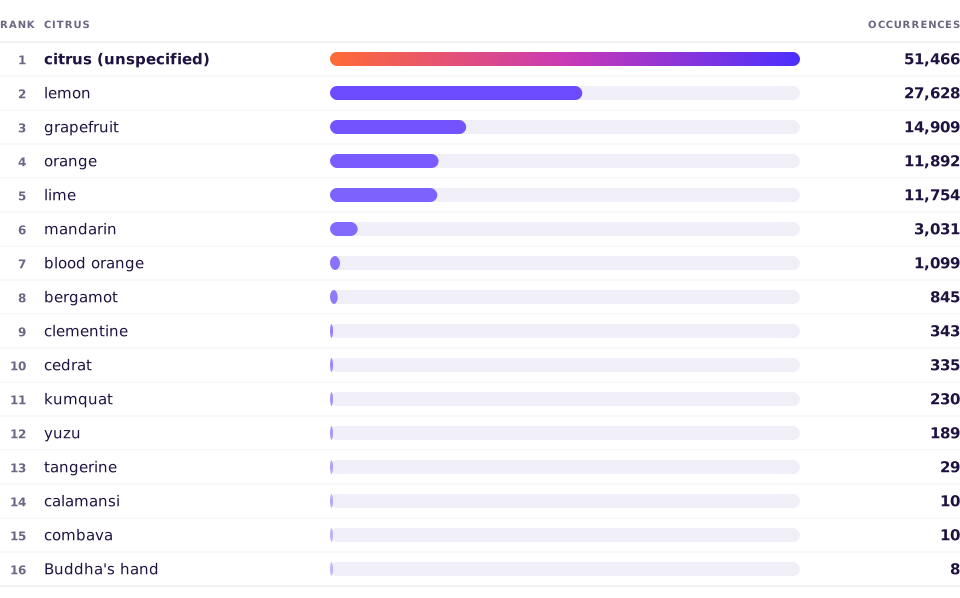
The most used term in the whole family is “citrus” itself. 51,466 times. Almost twice as often as lemon, which comes second.
Put another way: very often, the taster smells something citrusy and doesn't say which. “Citrus” is the word of someone who has recognised the family but not the member. The umbrella word, the one that commits to nothing. And honestly, who could blame them? Telling a clementine from a mandarin in a glass, blind, on the thirtieth sample of the morning — few people would guarantee it.
Past the leading pack, the ranking falls apart. Mandarin, sixth most cited citrus, already weighs seventeen times less than the generic term at the top. Below blood orange, everything drops under a thousand.
And right at the bottom, the heroes. Tangerine, 29 times. Combava and calamansi, 10 times each. And Buddha's hand: eight occurrences. Eight, out of more than four million.
Eight times, somewhere, a taster raised a glass to their nose and thought “Buddha's hand”. One would very much like to know what was in the bottle.
This ranking tells us less about wines than about tasters. It shows where our shared vocabulary runs out: four or five citrus fruits everyone agrees on, then a desert crossed only by those who have travelled widely, cooked a lot, or simply decided to be precise that day.
Next time “citrus” comes to you on its own, take three more seconds. Lemon or grapefruit? Zest or juice? That's sometimes where the real exploration begins — and incidentally, that's how you end up writing “cedrat” without flinching.
Record your own aromas on Tastee too, however precise they are. Who knows… the next calamansi in the database might be the one you write.
Thousands of comments sit dormant in notebooks, spreadsheets, and inboxes. Tastee turns them into sensory profiles, shareable reports, and ready-to-use materials — from a single cuvée's profile to an appellation's typicity, in every language your tasters write in.
Request a demo