An aroma as poetic as it is rare
Some words sound more like a magic spell than a wine aroma. “Petrichor” is firmly one of them.
Petrichor is that very particular smell of dry earth taking the first drops of rain after weeks of heat.
The word was coined in 1964 by two Australian researchers, Isabel Bear and Richard Thomas, from the Greek petra (stone) and ikhor (the fluid said to run in the veins of the gods). No less. A plain wet-pavement smell, with a mythological pedigree.
In wine, the descriptor is meant to point to a very particular kind of minerality: an almost earthy, damp freshness, found now and then in certain whites — seemingly more often on limestone or schist soils — just after the bottle is opened. The sort of nuance only the most seasoned tasters dare to name, and even then, only when they're sure of themselves.
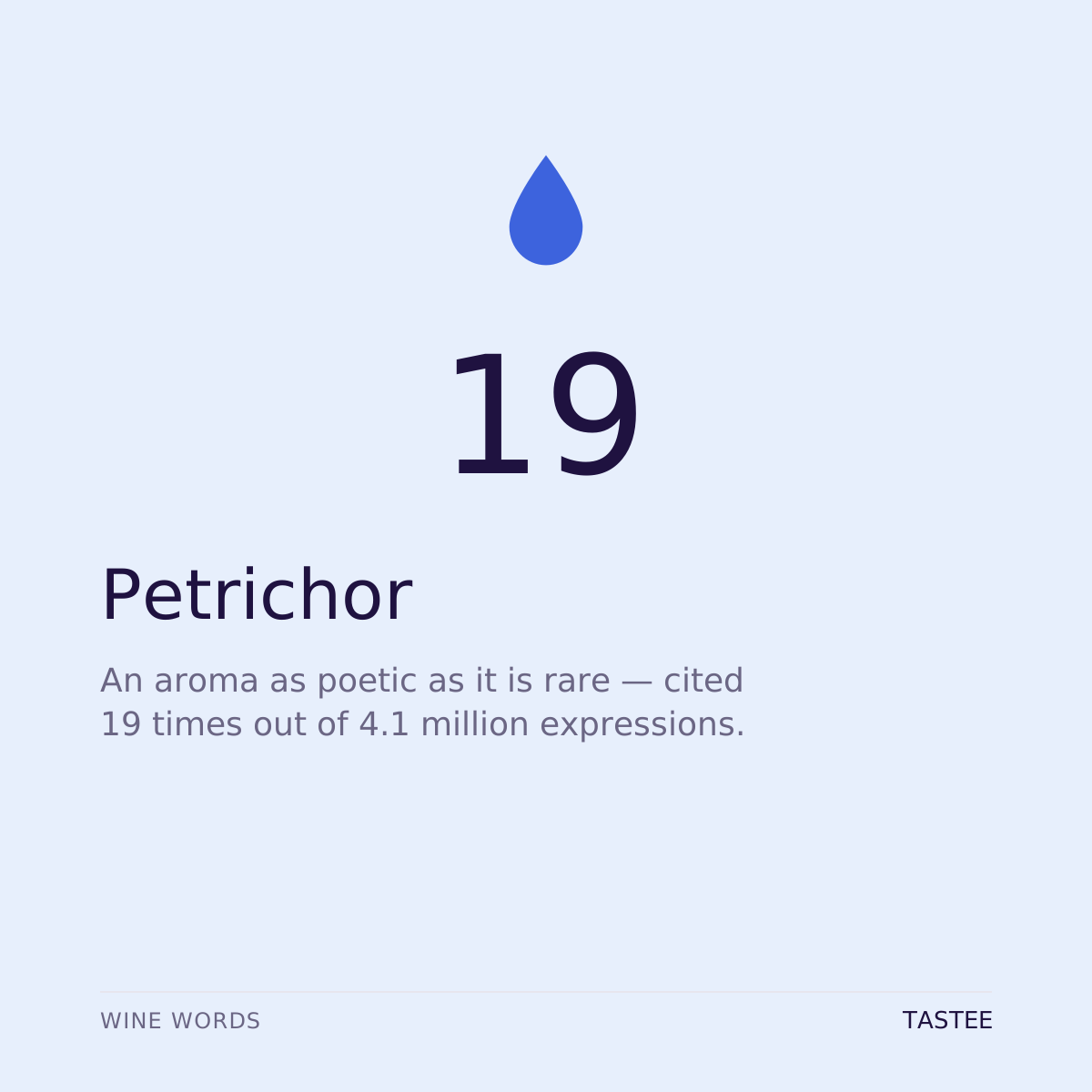
Across the 4,143,729 tasting expressions analysed by Tastee, the vast majority written by wine professionals, the term “petrichor” appears only 19 times. Nineteen. Which makes it one of the rarest and most specific aromas in the entire database.
Three reasons come to mind.
Reason 1: the brain struggles to name what it rarely meets. Unlike raspberry or vanilla, smelled and filed away hundreds of times since childhood, petrichor is a rare smell in daily life — poorly mapped by an olfactory memory that needs repetition to bind a smell to a precise word.
Reason 2: few tasters are confident they can recognise this very specific nuance, rather than a plain earthy or mineral note, which is far more familiar.
Reason 3 (unlikely): dropping “petrichor” into a tasting is to risk being asked to spell it.
What interests us in these 19 occurrences isn't so much the anecdote. It's what they reveal: tasting vocabulary has an immense long tail, and almost no one ever really looks at it.
We know very well what tasters write often. We know almost nothing about what they write only once.
Next time you open a mineral white just after a summer shower, close your eyes, breathe in, and ask yourself whether what you're smelling might be exactly that: stone, rain, and perhaps a little Greek mythology in your glass. You still may not be sure of yourself — but at least you'll finally know what it's called.
Record your own aromas on Tastee too, however unusual they are. Who knows… the next petrichor in the database might be the one you write.
Thousands of comments sit dormant in notebooks, spreadsheets, and inboxes. Tastee turns them into sensory profiles, shareable reports, and ready-to-use materials — from a single cuvée's profile to an appellation's typicity, in every language your tasters write in.
Request a demo