Competition
460 cuvées, 30 juries, 180 tasters and a results list delivered the same day. How the FNPEC moved its 35th edition off paper.
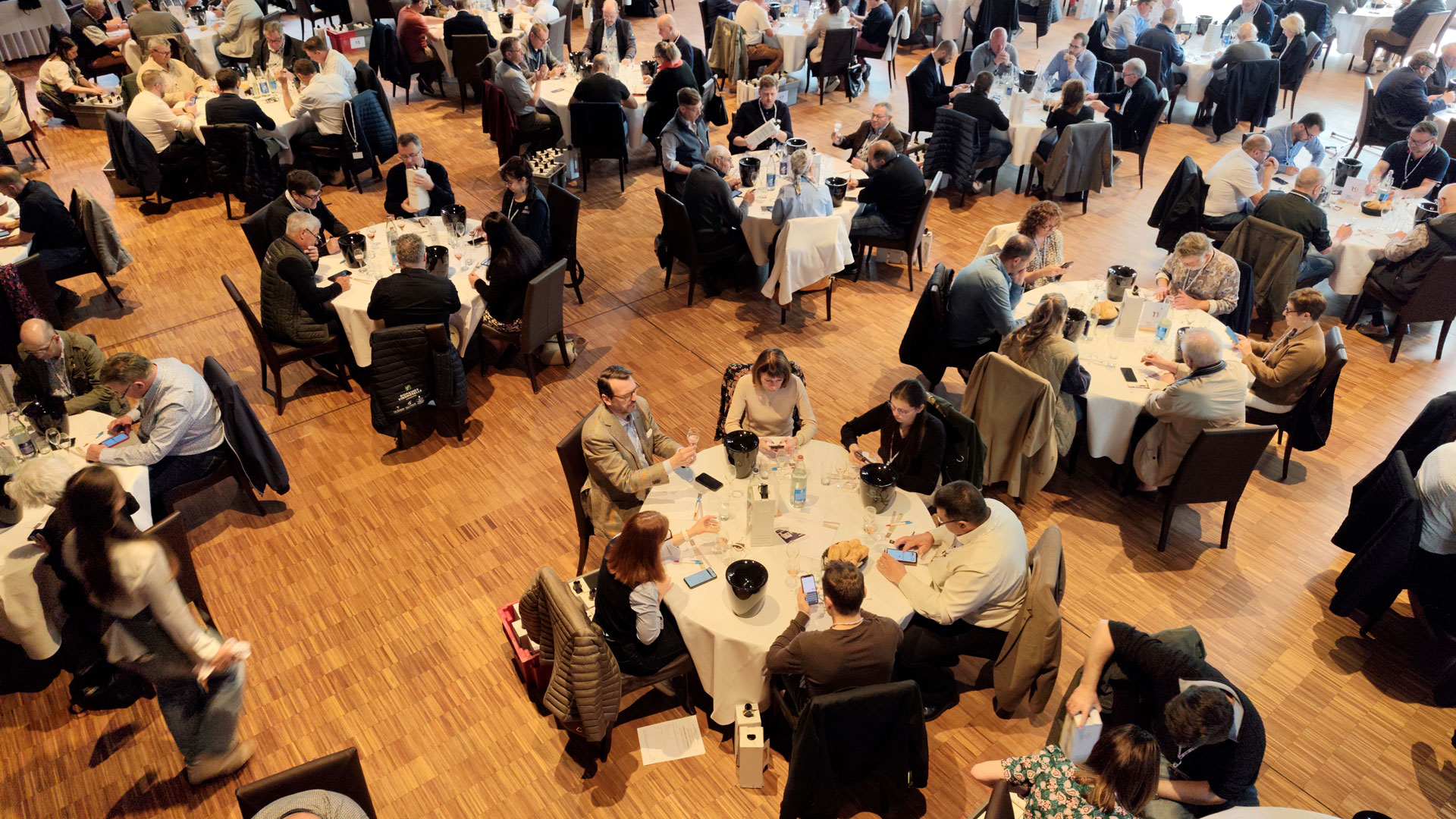
For its 35th edition, the Concours National des Crémants left the paper score sheet behind. In a single day, 30 juries of six tasters assessed 460 cuvées on Tastee. The FNPEC came away with results ready the same day and more than 2,700 tasting notes that can finally be put to use.
The Fédération Nationale des Producteurs et Élaborateurs de Crémant (FNPEC), the French federation of Crémant producers, organises the Concours National des Crémants every year, a benchmark event for French sparkling wines. The 2026 edition took place on 17 April in Mondorf-les-Bains, Luxembourg. Until this edition, the competition was run entirely on paper.
Every year, the competition brings together cuvées from the eight French Crémant appellations (Alsace, Bordeaux, Bourgogne, Die, Jura, Limoux, Loire and Savoie), joined by Luxembourg, host of the 2026 edition. The organisers had to anonymise 460 samples, coordinate 30 juries of six tasters, 180 professionals in all, and apply the official scoring grids identically from one table to the next. Volumes like these call for meticulous organisation.
Until now, the competition relied on the traditional method still used by many competitions. Scores were recorded on paper sheets, calculated at the end of each session, then compiled by hand in an Excel file, sometimes by a team working behind the scenes. Tasting notes, meanwhile, mostly went unused, as they were too long to compile and sometimes hard to decipher once handwritten.
For 2026, the FNPEC decided to go fully digital with a clear aim. It wanted to lighten the logistics, secure the results and, above all, make the most of the expertise of its 180 professional tasters.
Session preparation, sample anonymisation, jury allocation and the running of the day itself are explained step by step in our guide How to organise a wine competition with Tastee.
Setting up required no dedicated equipment and no prior installation. Each juror opens Tastee in the browser of their own smartphone, tablet or computer, scans a QR code and reaches the list of cuvées to assess in under a minute. There is no account to create and the interface is immediately clear, whatever the user's comfort with digital tools. Every juror was up and running as soon as the sessions opened.
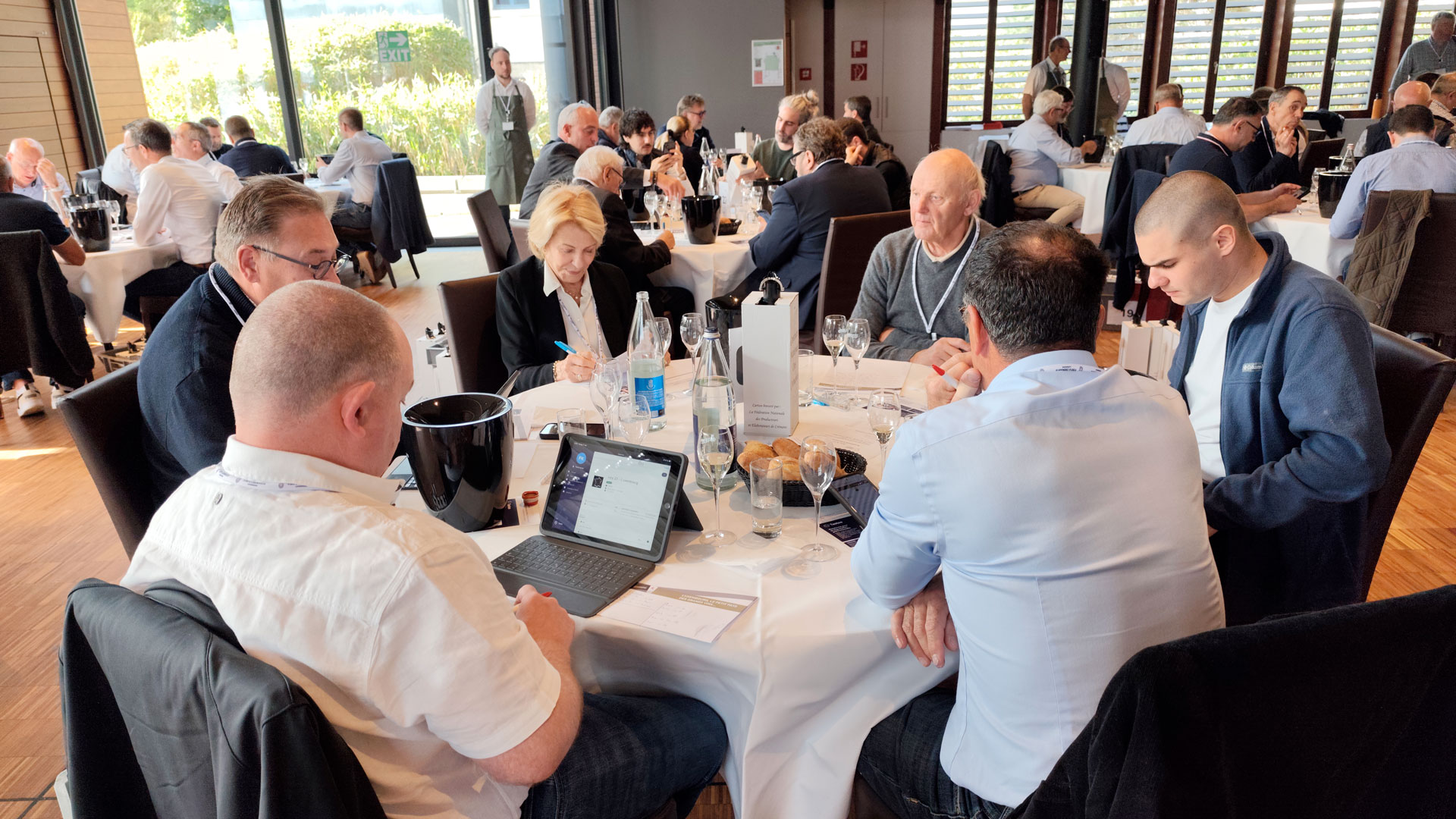
At each table, a jury president appointed by the organisers follows in their Tastee interface the average score of each cuvée and the detail of every juror's marks, updated in real time. Each cuvée's summary builds up as the votes come in. No more manual calculations, no more copying out, no more rounding errors at the end of the session.
The time once spent consolidating scores and writing summaries now goes to what matters most, namely leading the jury, encouraging debate between tasters and enriching the discussion around the glass. It also takes pressure off the presidents, who no longer bear sole responsibility for accurate calculations and can concentrate on the tasting.
Where paper used to require several extra hours to consolidate results, the FNPEC had them in hand as soon as the tasting ended. Lunchtime was enough for the organisers to finalise them. In the afternoon, the journalists present were able to taste the medal-winning cuvées, and the results were announced at a press conference held the same day. Less stress between the end of the tasting and the official announcement, more time to prepare communications, and a markedly better experience for the press and the wider industry.
With six tasters per cuvée, the 460 crémants generated more than 2,700 tasting notes in just a few hours. Beyond the medal list, this material is what gives the competition its lasting value. Until now it could not be used, for lack of the time and resources needed to transcribe and then analyse it.
Tastee includes a semantic analysis layer that processes every descriptor entered by the jurors. Each crémant therefore leaves with a consolidated taste profile, built from the combined perceptions of six professionals and available as soon as the tasting ends.
Aggregated across the whole competition, this data draws a sensory map of crémants. It reveals the dominant aromas of each region, the typicity of each appellation and the differences in style between whites and rosés. For the federation and the producing houses alike, this material becomes an industry asset. It can feed regional communications, enrich the technical sheets of medal-winning cuvées and, edition after edition, build a genuine observatory of crémant taste.
“We had long been aware of the limits of the paper score sheet. For the 35th edition, we decided to take the plunge. Tastee not only allows us to secure the results but, above all, to make the most of the wealth of our jurors’ comments. Our bet on bringing our members along with this change has paid off, and we now have the material to deepen our knowledge of our crémants, region by region.”
Louison Bosse-Platière, Coordinator at the FNPEC, in charge of the Concours National des Crémants
The FNPEC’s experience reflects a common situation in the wine world. Trade bodies, interprofessional organisations, specialist magazines, trade fairs and professional competitions generate considerable volumes of tasting data. Yet the sensory information, which holds the most value, is often lost for lack of a tool to consolidate it.
The need is always the same. Organisers want to lighten the logistics, make scores more reliable, shorten the time between tasting and announcing results, and capitalise on tasting notes. With a platform designed for professional tasting, a competition no longer produces just a medal list. It becomes a source of structured knowledge that can be drawn on from one edition to the next.
Find out more about the FNPEC.
One jury or thirty, fifty wines or five hundred. Tell us about your competition format and we will support you from session set-up to the analysis of tasting notes.
Tell us about your competition