Competition
Selecting the wines that represent Bordeaux abroad, with tastings digitised end to end and a sensory profile for every cuvée.

For the first time in its history, the CIVB digitised its Stock Outil selection session using Tastee. 150 wines evaluated, multiple juries involved, and a fully rethought organisation.
Every year, the CIVB (Conseil Interprofessionnel du Vin de Bordeaux), the governing body that represents and promotes the Bordeaux wine industry, brings together professionals to curate its collection of ambassador wines, known internally as the "stock outil", designed to represent Bordeaux appellations at tastings, training sessions and events across France and internationally. These wines are also featured at the CIVB's Bar à Vin in Bordeaux.
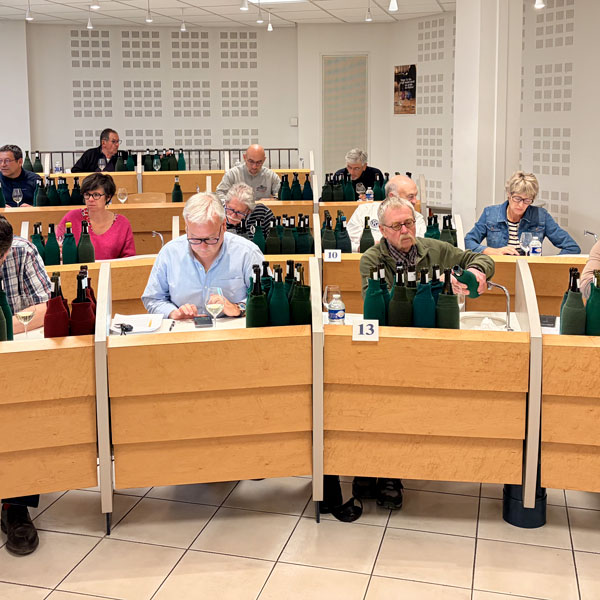
The first session of 2026, focused on red wines from the Côtes de Bordeaux and Côte de Bourg, brought together no fewer than 150 cuvées sourced through a call for samples from local producers.
The mission: identify the wines that will best represent these terroirs over the next 12 months. And for the first time, this selection was carried out in a fully digital format, using Tastee and its Session feature.

The setup followed the same process as previous sessions: the CIVB teams sorted, organised and assigned samples by session and jury, allocating an anonymisation number to each wine. Once completed, the list was handed over to Winespace for integration into Tastee, in line with the CIVB's own anonymisation rules.
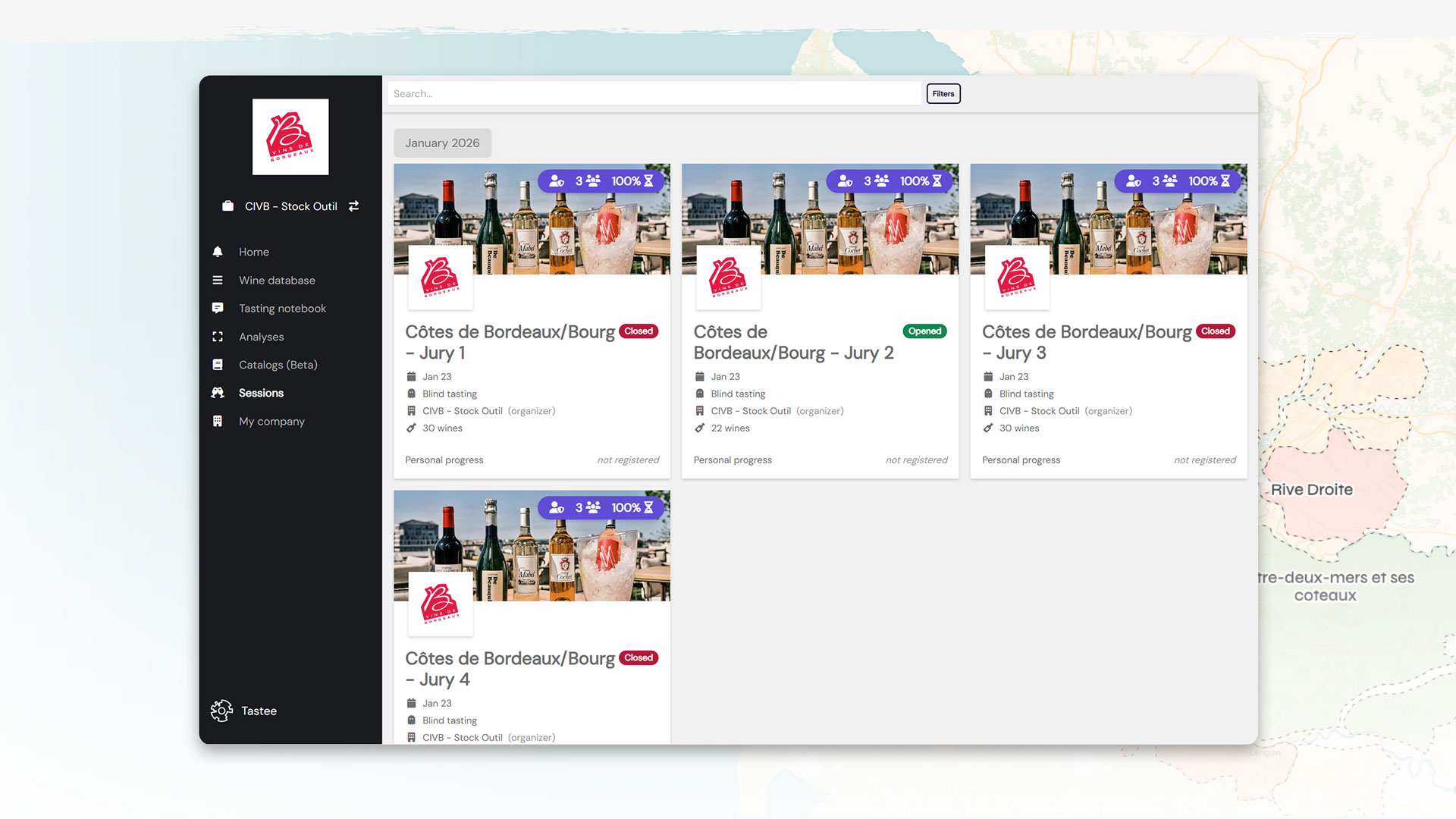
Automatic integration saved significant time, eliminated manual input errors, and provided maximum flexibility, with changes possible right up to the last minute. Each taster was assigned a personal Tastee account, with their jury and wine list ready to go. On the day, all they needed was a smartphone or laptop.
At the start of the session, tasters scanned the QR code linked to their jury to access their interface directly. The tool required no learning curve.
Evaluation followed the same scoring grid as previous sessions: a score out of 100, based on transparent criteria to align each taster's positioning, paired with a free-form tasting note aiming to describe the main organoleptic characteristics of each wine. In this first stage, each taster worked independently, without exchanging views with other jury members.

Thanks to real-time data entry, results were immediately available. Tastee's score table instantly surfaced the highest-rated wines on average, saving considerable time compared to paper-based sessions, where averages had to be calculated by hand on the spot.
A second, more collaborative phase then brought jury members together to discuss, exchange and re-taste the top samples, in order to identify those most deserving of a place in the Stock Outil. Around three wines per appellation were selected at the end of these discussions, with anonymity maintained throughout, before being sent to a laboratory for chemical analysis.
Throughout the morning, a single person was enough to run the tasting, monitor progress in real time and answer participants' questions.
The emphasis on thorough, high-quality tasting notes addresses a core priority for the CIVB: using these wines for promotional purposes. The information collected, once synthesised by Tastee, generates an average profile for each wine, whether selected or not. These profiles can then be used to present the cuvées to professionals and consumers who will have the opportunity to taste them.

Beyond the selection itself, tasting all these wines appellation by appellation builds material for broader analysis: what is the typical profile of these wines? What characterises this vintage? What proportion show significant faults? All valuable data for the CIVB's research department.
Over time, these perfectly archived sessions build a growing knowledge base. From one selection to the next, from one year to the next, it becomes possible to track evolutions, compare profiles and sharpen the understanding of style trends across the Bordeaux vineyard. A particularly valuable asset as Bordeaux wines look to reinvent themselves and win back consumers.
One jury or ten, fifty wines or a thousand. We adapt Tastee to your tasting process, from session set-up to the analysis of tasting notes.
Tell us about your selection