Feedback
A vertical tasting of exceptional vintages, captured live and turned into a clear reading of what each year has to say.
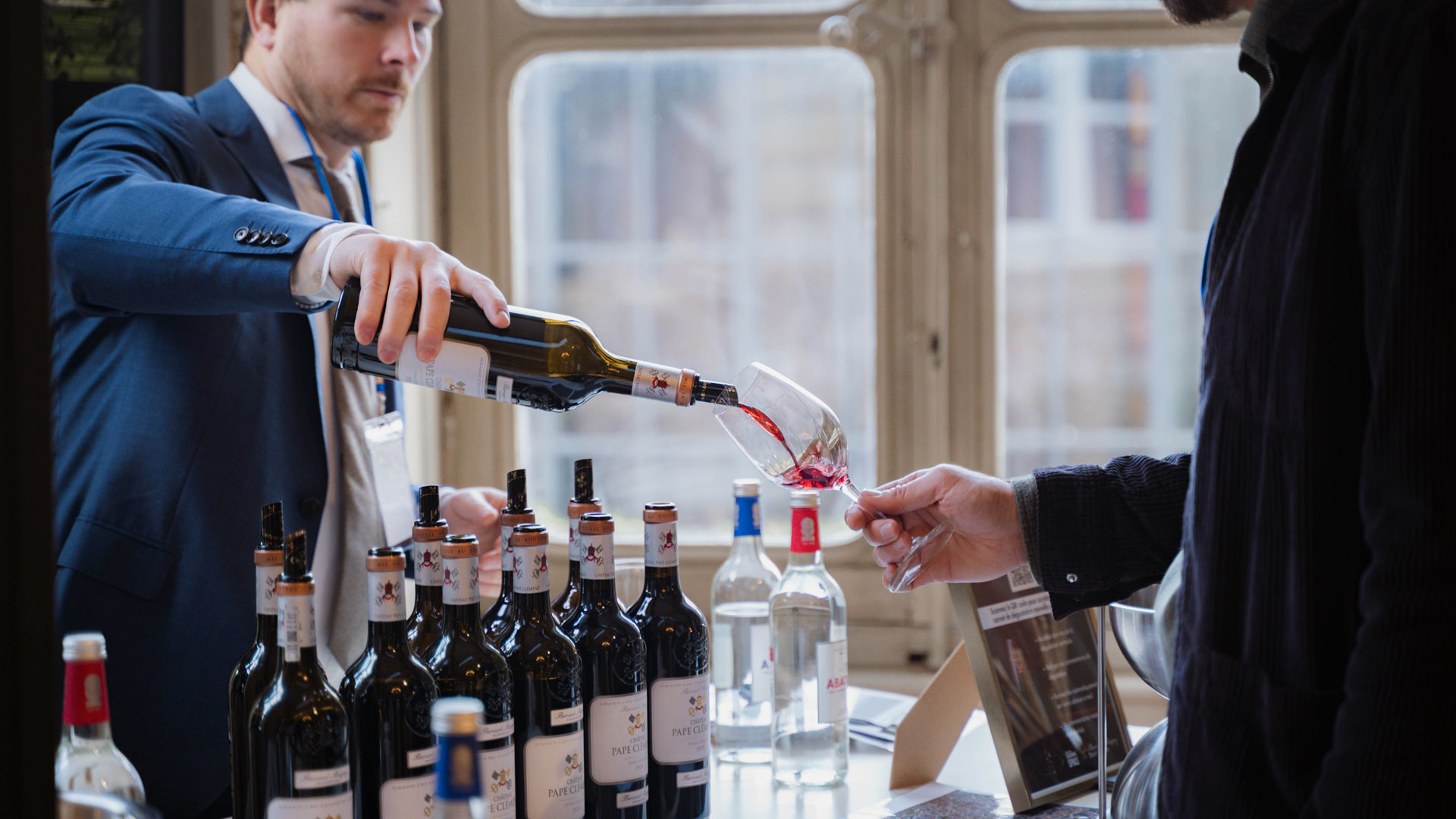
A vertical tasting is a privileged moment where one explores the history of an estate through its vintages, in order to understand the winemaker’s signature style and benchmark the wines of the property. This is exactly what Bernard Magrez did on 29 January, with a tasting of the 2018 to 2023 vintages of his four Grands Crus Classés, presented to Bordeaux wine merchants and brokers. For this occasion, Bernard Magrez entrusted Tastee with the digitalisation of the event.
To accompany this exceptional tasting, the Bernard Magrez teams had prepared a printed tasting booklet listing all the wines presented. But for the first time, a digital version was offered alongside it thanks to Tastee’s technology.
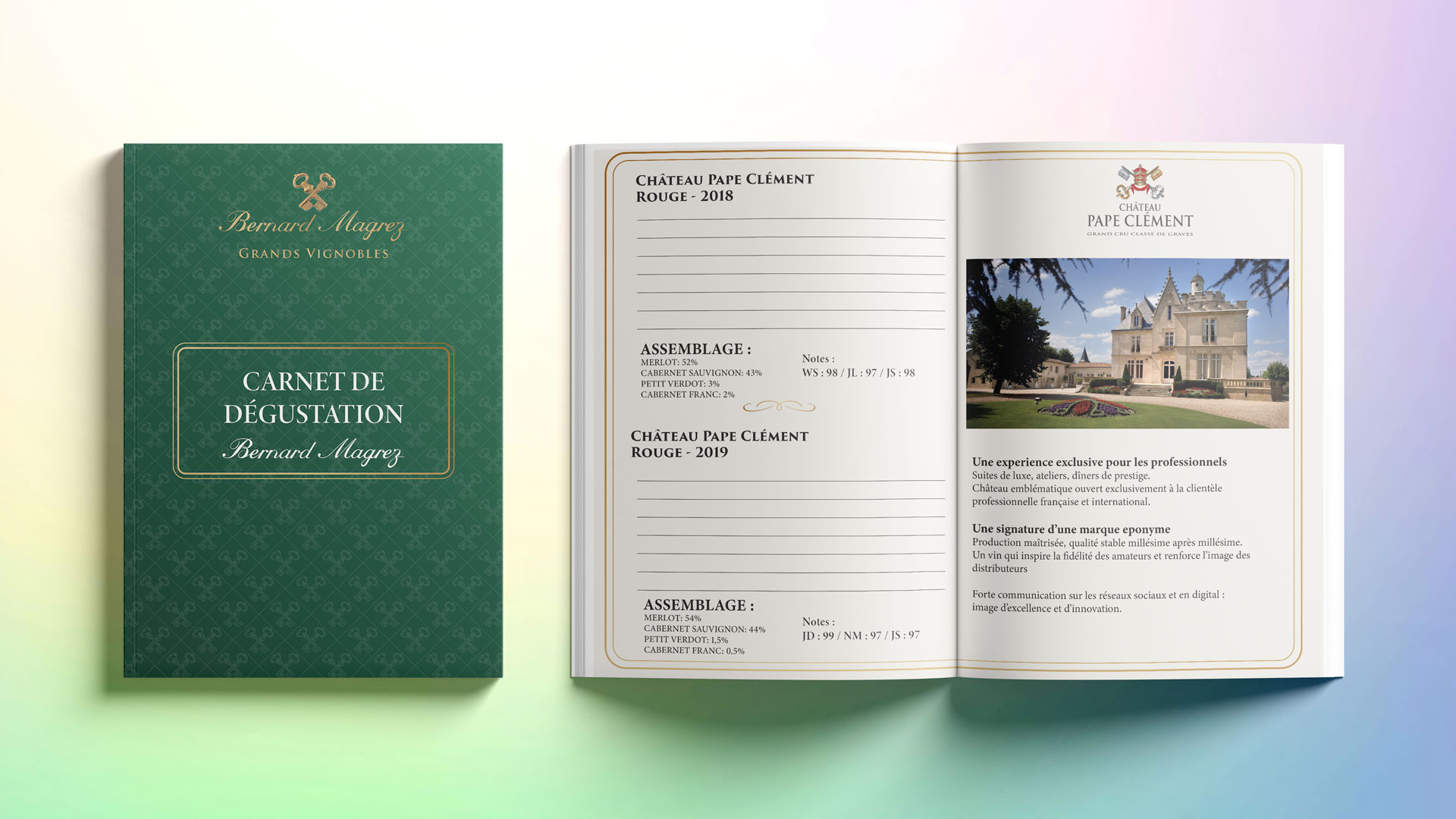
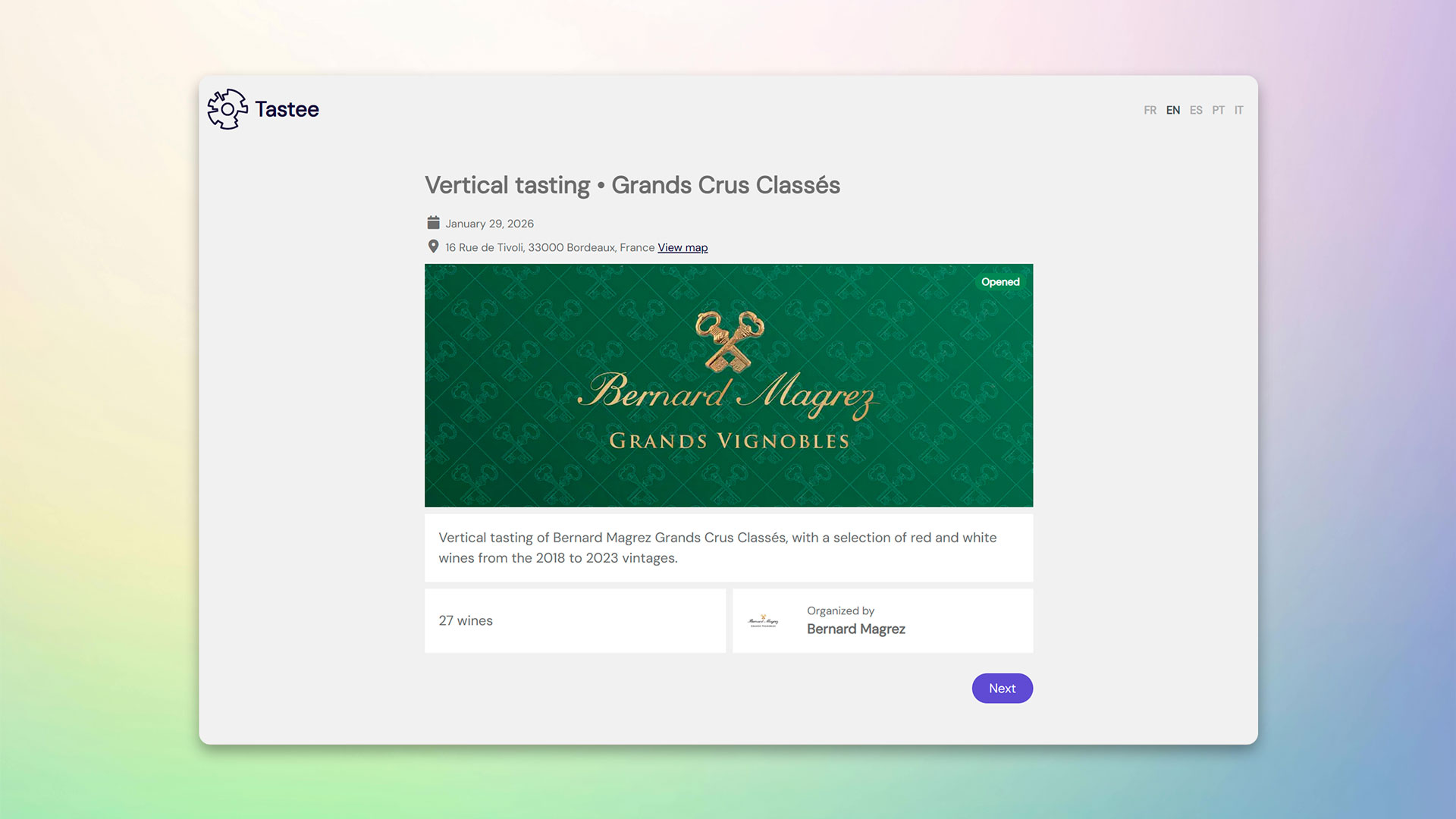
The digital tasting booklet included all the information from the paper version and much more. For each of the 27 cuvées presented, participants could easily access detailed technical information (blending, vinification, ageing) as well as ratings from leading international critics.
This first digital experience foreshadows a new version of the application that will allow the integration of complete technical sheets, multimedia content, and a wealth of information impossible to compile in a traditional paper format.
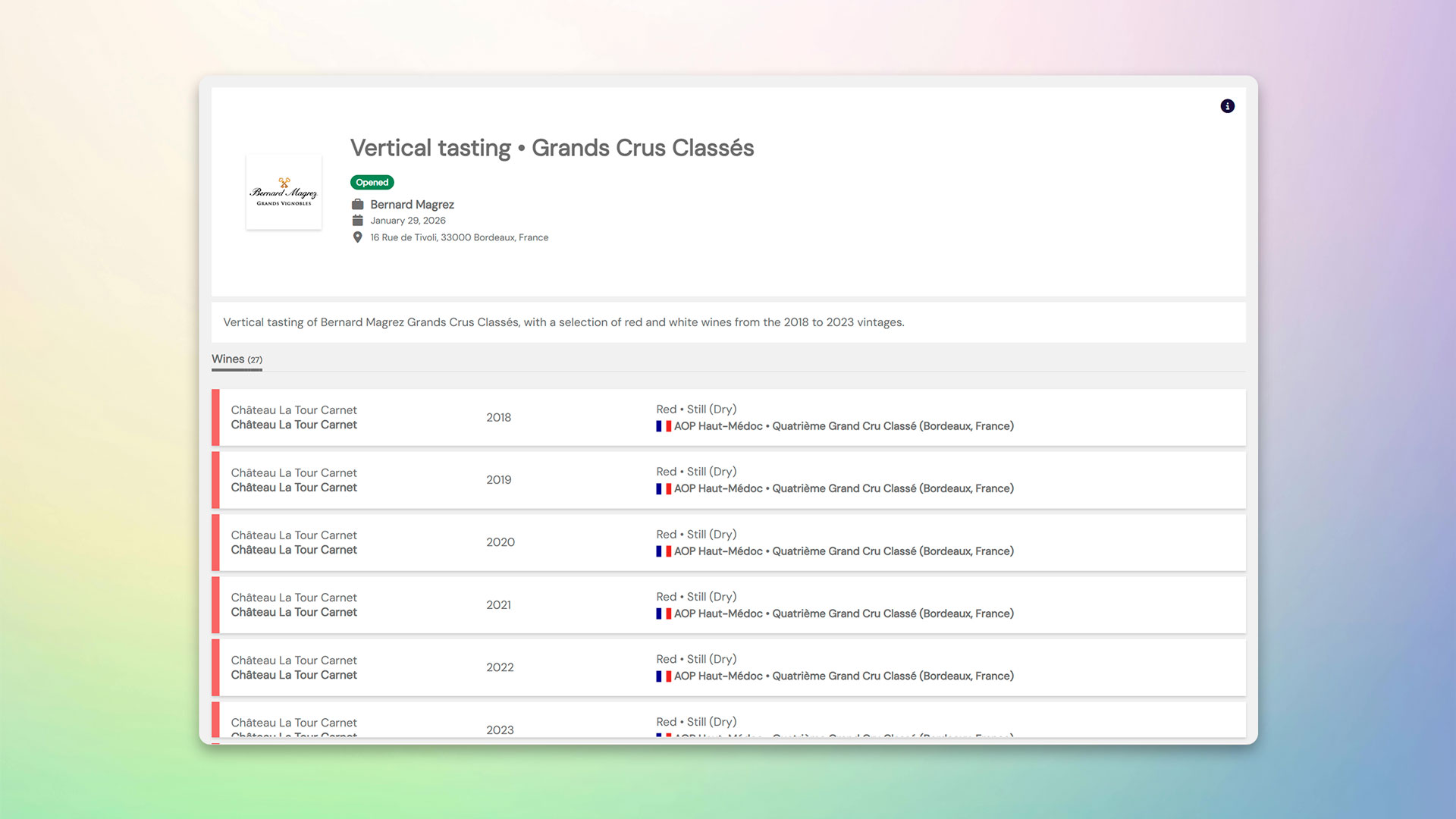
An Excel file containing information about the 27 wines was shared with the Winespace team, enabling automatic upload of all cuvées into a Tastee session. This method was chosen for its speed of execution and significantly reduced preparation time while eliminating the risk of manual input errors, which are common during events involving a large number of references.
It is worth noting that the Bernard Magrez teams could also have generated this booklet completely independently directly from the Tastee platform.
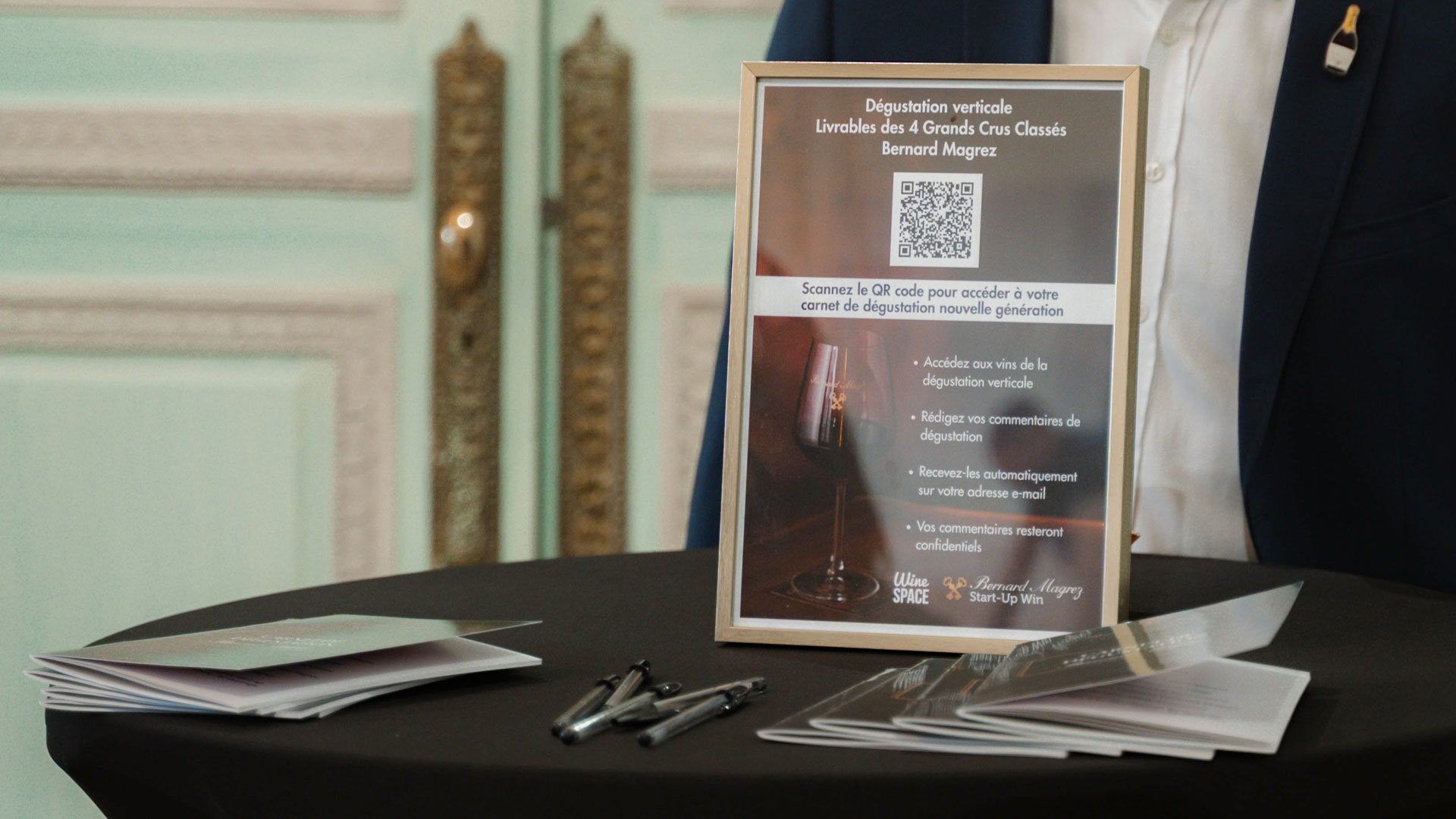
Access to the digital tasting booklet was designed to be as fast and seamless as possible. Participants simply had to:
Tastee goes far beyond a static PDF, a mere digitised copy of a paper booklet, by offering an interactive web application specifically designed for tasting:
One of the major advantages of digitalisation with Tastee lies in the structuring and durability of the information collected. Unlike paper booklets, which may be lost or set aside because they are difficult to exploit, participants’ comments are:
For participants, this guarantees they can revisit and make use of their tasting impressions months or even years later, with all the necessary contextual information.
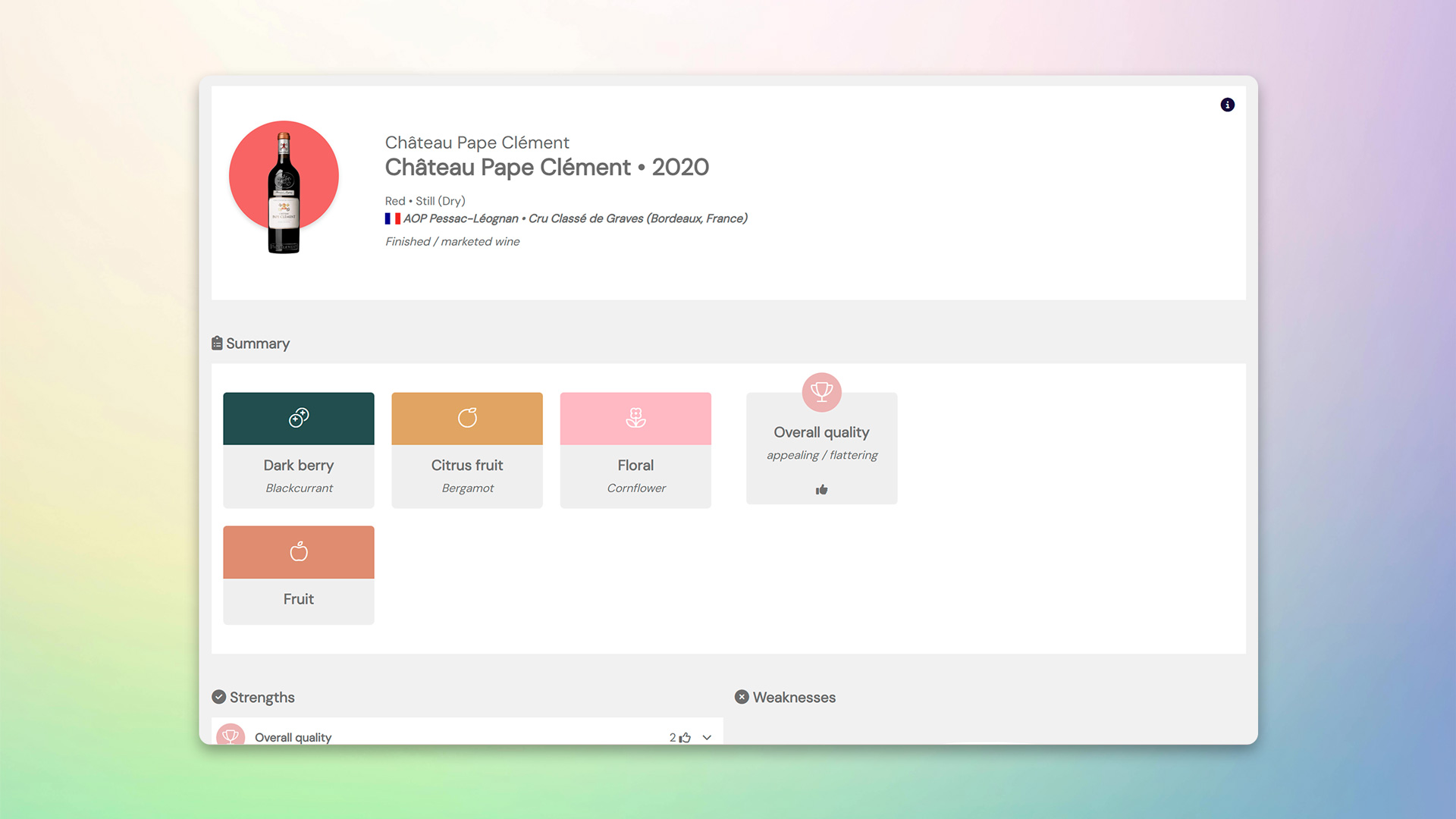
For Bernard Magrez and his teams, Tastee made it possible to collect a wealth of valuable information about how industry professionals perceive their wines.
The collected data was automatically:
This collective analysis enables the estate to:
The sensory data generated during this event now forms a unique informational asset that enriches the understanding of the wines of Maison Bernard Magrez.
The digitalisation of this vertical tasting marks a turning point in the way wine events are approached. The enthusiastic reception from participants, many of whom preferred the digital version despite the availability of a printed format, highlights evolving behaviours in a sector often considered conservative.
This success can be explained by the many advantages of the digital approach: easy implementation, flexibility with changes possible until minutes before the event, richer shared information, collection of valuable anonymous feedback, reduced environmental footprint, and better cost control.
Tastee thus transformed a traditional tasting into an enhanced experience where each participant benefits from an intuitive personal tool, while allowing the estate to capitalise on structured, actionable data.
This experience offers a glimpse into the future: more and more events are likely to adopt this format, first as a complement to paper, and eventually as a full replacement.
A digital tasting booklet, participants' notes and real-time summaries for your professional tastings.
Let's talk about your event